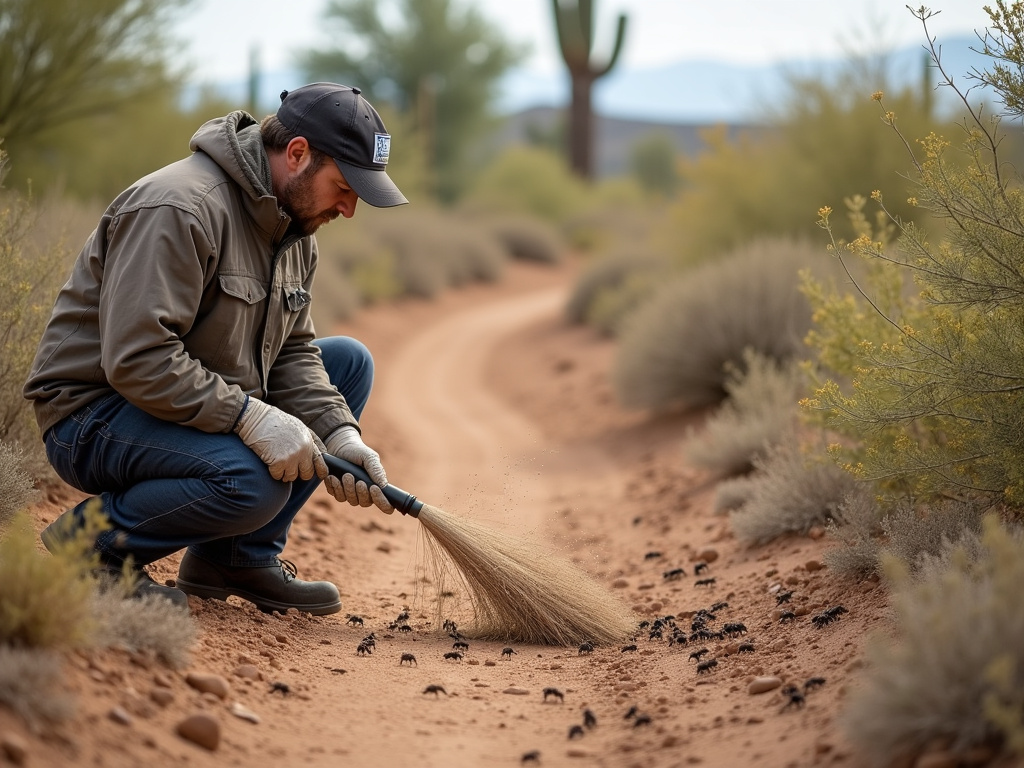
Phoenix summers push ants indoors as temperatures climb past 110 degrees and moisture sources become scarce. Homes in Arcadia and Biltmore often see Argentine ants trail along irrigation lines and stucco cracks while older Maryvale properties with slab foundations give colonies easy entry points near plumbing penetrations. Treatments must account for the extreme heat that makes liquid baits evaporate quickly so gel and granular formulations placed in shaded voids last longer.
Monsoon rains in July and August flood outdoor nests around Camelback Mountain and Papago Park forcing colonies to seek higher ground in attached garages and storage sheds. Technicians working in Tempe and Mesa routinely check weep holes and expansion joints because these narrow gaps become superhighways once soil moisture rises. Using non-repellent products allows workers to carry material back to the queen rather than scattering the colony across neighboring lots.
Ant Control Near You — Choose Your City
Every city below has its own local Ant Control page with coverage details.
South Mountain properties with desert landscaping face harvester ant mounds that harden in dry spells and become difficult to penetrate without drilling. Perimeter applications must extend at least ten feet past the foundation because colonies forage that far in search of food during cooler morning hours. Follow-up visits scheduled seven to ten days later catch any satellite nests that reappear after the first treatment.
Technician insight
In Phoenix the thing that catches most people out with ant control is how fast Argentine ants relocate when irrigation runs daily. A single missed trail behind a stucco expansion joint in an Arcadia home can restart the whole problem within a week after the first treatment.
South Mountain Home with Recurring Kitchen Trails
Homeowners noticed persistent ants behind the sink during July monsoons. Inspection found a colony entering through a slab plumbing penetration that had opened after years of soil expansion. Gel bait was placed along the trail and in the void; the follow-up visit confirmed the colony was gone and no new activity appeared after the next rain.
Ant Control Services We Offer
✓Argentine Ant Baiting
Slow-acting gel baits placed along trails and moisture sources eliminate the colony rather than just the visible workers common in irrigated Phoenix yards.
✓Harvester Ant Nest Treatment
Direct nest injection and mound drenching targets established colonies around South Mountain and Ahwatukee properties where soil is compacted by heat.
✓Indoor Kitchen Ant Control
Crack and crevice treatments plus bait stations address trails behind appliances and cabinets in older Biltmore and Arcadia homes with slab plumbing.
✓Outdoor Perimeter Defense
Granular and liquid barrier applications around foundations reduce re-entry from neighboring lots in dense Maryvale and Camelback East neighborhoods.
✓Monsoon Season Ant Prevention
Pre-rain inspections and targeted treatments limit colony relocation into garages and patios when July storms flood outdoor nests across the valley.
Ant Control Cost in Arizona
| Service | Typical Range | What Affects It |
|---|---|---|
| Initial Ant Treatment | $175–$350 | Varies with square footage and whether multiple colonies are active |
| Follow-Up Visit | $75–$125 | Included when scheduled within ten days of initial service |
| Seasonal Prevention Plan | $450–$650 | Three visits covering spring through monsoon season |
| Harvester Ant Mound Treatment | $125–$225 | Per mound when drilling or deeper injection is required |
Ranges are typical for Arizona and confirmed with an exact written quote before any work starts.
How it works
- 1
Property Inspection
Technician walks the full perimeter and interior checking trails, moisture points and entry gaps common in Phoenix slab construction.
- 2
Colony Identification
Species and nest locations are mapped so the correct bait or drench reaches the queen instead of scattering workers.
- 3
Targeted Treatment
Non-repellent products and baits are applied in shaded voids, along irrigation lines and at active mounds during cooler morning hours.
- 4
Follow-Up Visit
Return service seven to ten days later confirms colony decline and treats any satellite activity that appears after monsoon moisture shifts.
Pricing
Pricing depends on property size, ant species and number of active nests.