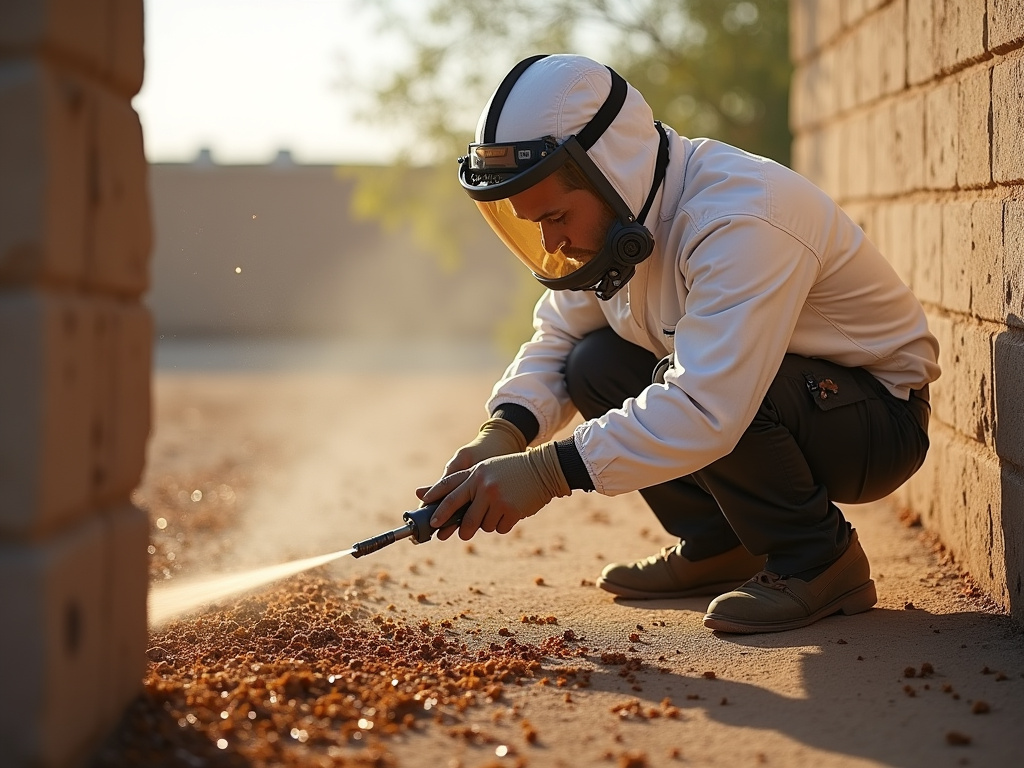
Tempe's housing stock ranges from mid-century homes around Mill Avenue to modern builds off AZ-202, where termite control crews routinely address subterranean infestations fueled by extensive lawn irrigation in the hot desert climate. Mild winters extend the active season, causing common failures when mud tubes form along foundations near Tempe Town Lake without early detection. Local work differs because proximity to Arizona State University brings frequent inspections in rental properties with high tenant turnover that masks early signs.
Termite Control in Tempe — What We Handle
- ✓Soil treatments must account for the specific drainage patterns along US-60 corridors
- ✓Drywood termite monitoring increases in dense Mill Avenue commercial conversions
- ✓Access challenges arise in older ASU-area neighborhoods with limited crawl space entry
Termite Control Services We Offer in Tempe
✓Drywood Termite Localized Treatment
Direct injection of termiticide into active galleries in attics and walls common in 1950s–1970s Phoenix homes without tenting the entire structure.
✓Subterranean Termite Bait System Installation
Placement of in-ground stations along foundation perimeters in Ahwatukee and Maryvale where irrigation keeps soil moist enough for colony activity.
✓Termite Inspection and Written Report
Detailed crawlspace, attic and exterior examination for properties in Arcadia and Biltmore, documenting mud tubes, frass and moisture conditions.
✓Wood Treatment and Protective Coating
Application of borate-based products to exposed framing during renovations near Camelback Mountain to deter future drywood entry.
✓Post-Construction Termite Prevention
Drilling and rodding along slab edges in South Mountain homes to create a continuous barrier after additions or landscaping changes.
Phoenix summers push temperatures past 110 degrees, driving drywood termites deeper into attic framing and wall voids of older homes built in the 1950s through 1970s in Biltmore and Arcadia. These colonies need only small amounts of moisture, so even minor roof leaks around Papago Park or near Camelback Mountain let them persist without obvious exterior signs. Treatments must account for the thick stucco and plaster common in these neighborhoods, which can hide galleries until damage reaches load-bearing beams.
Subterranean termites follow irrigation lines and tree roots in Ahwatukee and Maryvale, where clay-heavy soils retain just enough dampness during monsoon season to support mud tubes. Standard liquid barriers often fail here because the extreme heat accelerates product breakdown on south-facing foundations. Bait stations placed along property lines near South Mountain trails have shown better long-term results when monitored every 90 days through the cooler months.
How It Works in Tempe
- 1
Initial Property Walk-Through
Technician checks attic, crawlspace and exterior stucco for signs of drywood pellets or subterranean tubes while noting irrigation patterns and tree proximity.
- 2
Detailed Inspection and Mapping
Active galleries and moisture sources are marked on a diagram specific to the home’s layout in neighborhoods like Biltmore or Arcadia.
- 3
Treatment Selection and Application
Localized injection, bait stations or perimeter drilling is performed based on termite type and construction details found during inspection.
- 4
Follow-Up Monitoring
Stations or treated zones are checked on a 90-day cycle through cooler months to confirm colony decline before closing the file.
Serving All of Tempe
We regularly handle termite control jobs near:
- 📍Tempe Town Lake
- 📍Arizona State University
- 📍Mill Avenue
- 📍Papago Park
- 📍Downtown Tempe
Termite Control Pricing in Tempe
Upfront quotes based on square footage, construction type and whether fumigation or localized work is required.
Want the full picture of this service? See our Termite Control page, or everything we do in Tempe, AZ.